By James Walker — CFP® candidate, Boston MA · Updated January 2026

Living on $30,000 a year in the US is genuinely hard, and I am not going to pretend otherwise. But it is doable in most metros with intentional choices and full use of the safety-net programs and tax credits the federal government already pays for. Here is the actual math.
What is the real take-home pay on a $30K salary?
Per the IRS tax withholding estimator, a single filer earning $30,000 in 2026 with the standard deduction ($14,600) has taxable income around $15,400 – landing in the 12% federal bracket. Federal tax owed runs roughly $1,650. FICA (Social Security 6.2% + Medicare 1.45%) takes another $2,295. State tax varies: Texas/Florida/Tennessee/Nevada have no state income tax; California takes roughly $500; Massachusetts roughly $1,400.
Net take-home in a no-state-tax state: roughly $26,055/year or $2,170/month. In a high-tax state like California: roughly $24,400/year or $2,030/month.
What does a realistic $30K budget look like?
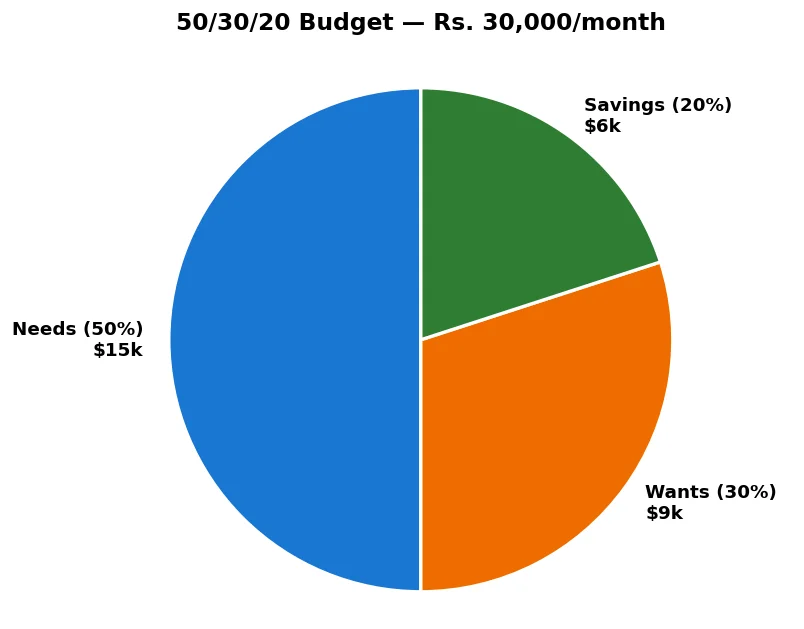
Here is the breakdown I work with for someone earning $30K in a mid-cost US city:
- Rent (with roommate): $700
- Groceries: $250
- Eating out: $50
- Transportation (used car insurance + gas, or transit pass): $200
- Utilities + phone + internet (split): $150
- Health insurance after ACA subsidy: $100
- Personal care + clothing: $80
- Entertainment: $40
- Savings (emergency fund first): $300
- Buffer: $250
What government benefits am I likely eligible for at $30K?
This is where most low-income earners leave money on the table. At $30K single, you may qualify for:
- Earned Income Tax Credit (EITC) – per IRS, max EITC for a single filer with no kids is around $632; with one child it climbs to $4,213; two kids $6,960; three+ $7,830 (2026 figures – verify current).
- ACA premium tax credits – per HealthCare.gov, at 100-250% of the Federal Poverty Level you qualify for significant marketplace subsidies. $30K single is roughly 200% FPL.
- SNAP (food stamps) – varies by state and household, but $30K single may qualify for partial benefits in some states. Check your state’s SNAP portal.
- Saver’s Credit – per IRS, contributing to a retirement account at $30K AGI earns up to a 50% credit on the first $2,000 contributed.
How do I cut housing – the biggest line item?
Housing eats most $30K budgets. Tactics that actually work: take a roommate or rent a room (cuts $400-700/mo in most metros), look at HUD Section 8 housing choice vouchers (long waitlists but enormous savings), consider house-hacking (renting out a room if you own), look at smaller cities (Pittsburgh, Cleveland, Buffalo, Tulsa, Memphis all have median rents under $1,200). Per CFPB, housing should ideally stay under 30% of gross income – at $30K that is $750/month, which is genuinely tight in most major metros.
How do I keep food costs to $250-300/month?
Cook from raw ingredients (chicken thighs, rice, beans, frozen vegetables, eggs, oats, pasta). Limit eating out to $50/month max. Shop at Aldi, Lidl, Walmart, or warehouse clubs. Use cash-back apps (Ibotta, Fetch). Skip premium grocery stores until your income grows.
How much should I save with a $30K income?
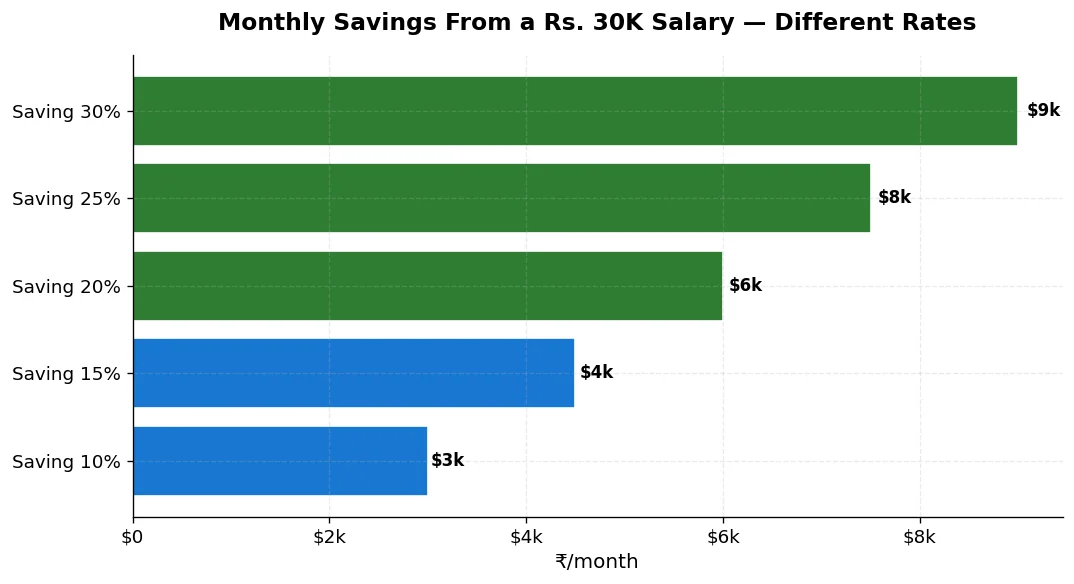
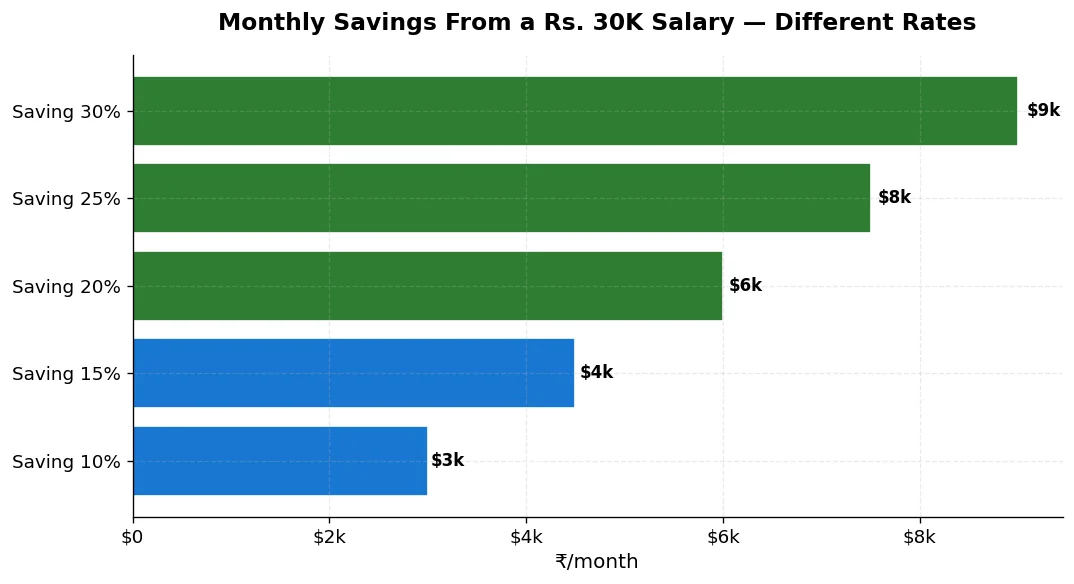
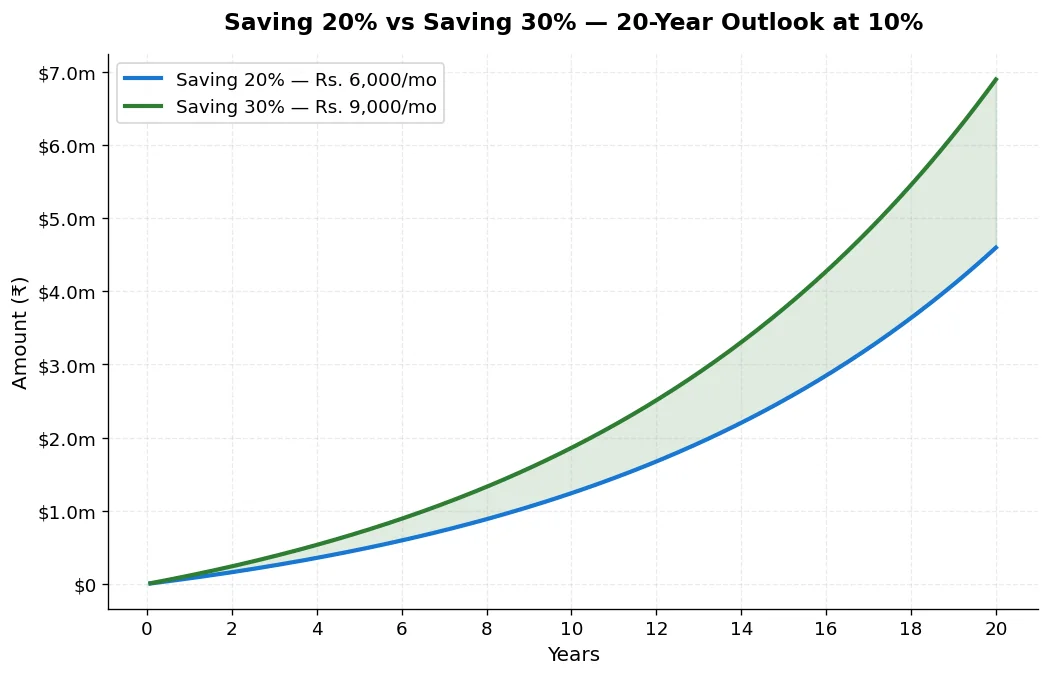
Aim for a $1,000 starter emergency fund first – that handles most car/medical surprises. Then build to one month of expenses ($2,000) before tackling retirement. The traditional 20% savings rate is brutal at $30K, but even $50-100/month into a Roth IRA at age 25 compounds significantly: $100/mo at 7% real return for 40 years is roughly $240,000.
What about transportation on $30K?
Avoid car loans if possible. A used Toyota Corolla or Honda Civic bought for $6,000-$8,000 cash will run reliably for 100K+ miles. Insurance for a 30-year-old with clean record on an older car runs $80-130/month in most states. If you live in a city with decent transit (NYC, Boston, DC, Chicago, SF), a $100/mo transit pass is dramatically cheaper than car ownership.
Should I contribute to a 401(k) on a $30K salary?
If your employer offers a match, contribute enough to capture the full match – it is free money. A common 100% match on first 3% means $900/yr added by your employer at $30K salary. Beyond the match, prioritize the emergency fund and high-interest debt before retirement contributions. The Saver’s Credit makes IRA contributions especially attractive at this income level.
Related Reading on FinanceFernly
- How to save $10K in a year
- Building an emergency fund
- How to read your pay stub
- Best high-yield savings accounts
Frequently Asked Questions
Can you really live on $30,000 a year in the US?
Yes, but it requires intentional choices: roommate housing, no car payment, cooking at home, and full use of ACA/EITC/SNAP/Saver’s Credit. The lifestyle is tight but sustainable in lower-cost metros like Pittsburgh, Cleveland, Tulsa, or Memphis. In high-cost cities like NYC, SF, Boston, or LA, $30K is extremely difficult without subsidized housing.
What is the EITC and do I qualify at $30K?
The Earned Income Tax Credit is a refundable federal tax credit for low-to-moderate income workers. A single filer at $30K with no kids gets roughly $632; with one qualifying child up to $4,213; with three or more children up to $7,830 (2026 figures, verify at IRS.gov). It is refundable, meaning you get it even if you owe no tax.
Should I prioritize debt or savings on $30K?
Build a $1,000 starter emergency fund first. Then attack any debt over 8% interest (credit cards, payday loans). Then build to one month of expenses saved. Only then layer in retirement contributions beyond the employer 401(k) match. The order matters: a small emergency fund prevents new debt when surprises hit.
Can I afford health insurance on $30K?
Yes. The ACA marketplace at HealthCare.gov offers premium tax credits at your income level that can bring monthly premiums to $50-150 depending on state and plan. Going uninsured exposes you to catastrophic medical debt – the leading cause of US bankruptcy. Never skip health coverage if you can find any subsidized option.
Is it worth contributing to a Roth IRA at $30K?
Absolutely, even small amounts. You are likely in the 10-12% federal bracket – one of the lowest you will ever face – making Roth contributions extremely tax-efficient. Plus the Saver’s Credit can refund up to 50% of your first $2,000 contribution. Even $50/month started at 25 grows to six figures by retirement.
Final thoughts from a CFP candidate
A $30K salary is the bottom rung of US working-class life, but it is workable with discipline and full use of the credits and benefits you are entitled to. The biggest mistakes I see in CFP case studies at this income level: not claiming EITC, not signing up for ACA subsidies, taking on car loans, and ignoring employer 401(k) matches. Fix those four and the budget gets dramatically easier.
The goal is not to stay at $30K forever – it is to keep your costs low while you build skills, increase income, and avoid the debt traps that lock people into paycheck-to-paycheck life. Every dollar of EITC you claim and every dollar of employer match you capture is a step out of that trap.
